

Key Takeaways
- Myopia causes blurry distance vision because of how the eye is shaped.
- Screens don’t directly cause myopia, but heavy near-focus work can contribute to progression.
- Not enough outdoor time is one of the strongest factors linked to worsening myopia in kids.
- Simple daily habits like the 20-20-20 rule can help reduce eye strain.
- Regular eye exams help catch changes early, especially during childhood.
Your child squints at the TV from across the room. They sit closer and closer to the screen. You’ve noticed it getting worse. If this sounds familiar, you’re not alone. Screen time is a real concern for a lot of families, and questions about myopia come up often at Eyestyle Eyecare, where the team offers children’s eye exams at both locations.
Screens don’t directly cause myopia, but the habits around them can speed up how quickly it progresses, especially in children and teenagers. Here’s what you need to know.
What Myopia Actually Does to Your Vision
Myopia, or nearsightedness, happens when the eyeball grows slightly too long. Instead of focusing light directly on the retina, light lands in front of it. The result is that close objects look sharp, but anything at a distance looks soft and blurry.
It typically starts in childhood and can continue getting worse through the early 20s. That progression window is exactly why early attention matters. Myopia affects people of all ages, but managing it early gives you the most options down the road.
The Link Between Screen Time and Myopia
Why Screens Put More Strain on Your Eyes
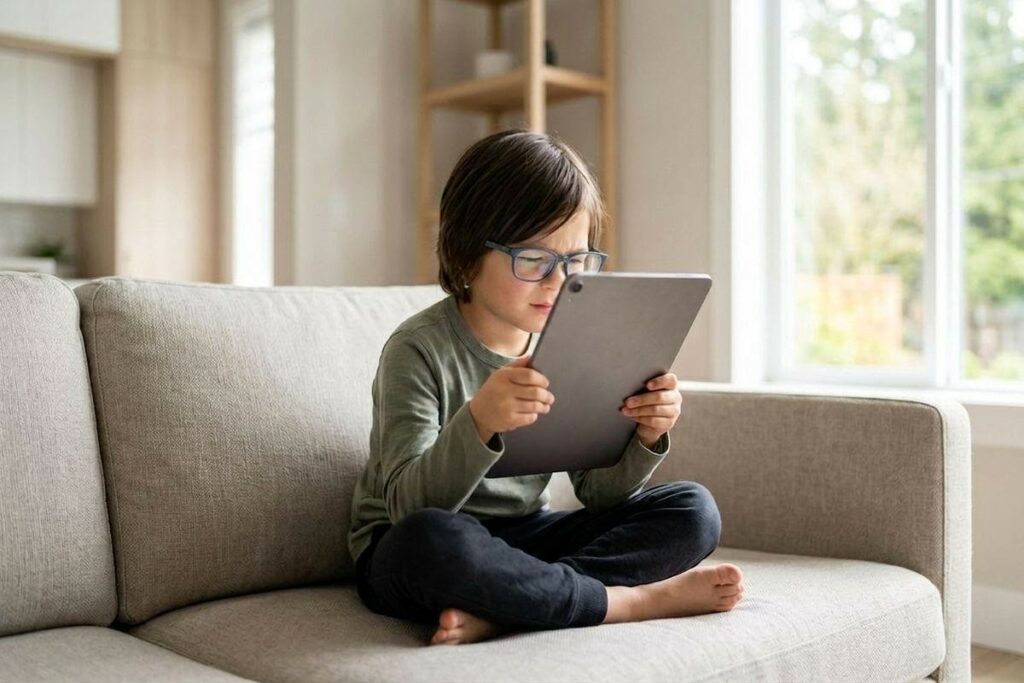
Screens aren’t the sole reason myopia develops, but they do put your eyes in a demanding position for long stretches. Devices like phones and tablets are often held closer than a book, which puts more demand on the eye’s focusing muscles. Over time, that sustained near effort can be fatiguing.
There’s another factor most people don’t think about. You blink less when staring at a screen. Less blinking means the tear film breaks down faster, which can leave eyes feeling dry, irritated, and strained by the end of the day. If that sounds familiar, learning more about digital eye strain can help you understand what’s happening and how to manage it.
Signs Your Child’s Vision May Be Affected
Kids don’t always say their vision is blurry. Instead, watch for these signals:
- Squinting or leaning closer to screens or the TV
- Frequent headaches or rubbing their eyes
- Blurry vision after looking up from a phone or tablet
Any of these can be worth mentioning at their next eye exam.
What Causes Myopia to Get Worse
Screen time is one piece of a larger picture. Several factors tend to work together when myopia progresses:
- A family history of myopia raises the likelihood a child will develop it
- A lot of near work without regular breaks keeps the eyes in a constant state of close focus
- Limited time outdoors each day, which research has linked to faster myopia progression in children
Outdoor time is worth highlighting here. Natural light and the ability to focus on far-away objects gives the eyes a break from near work in a way that indoor activities simply don’t replicate. Roughly two hours of outdoor time per day is a commonly referenced target for children.

Simple Habits That Help Slow Myopia Progression
The 20-20-20 Rule
This one is easy to remember and easy to use. Every 20 minutes of screen time, look at something 20 feet away for 20 seconds. That brief shift gives the focusing muscles a chance to relax. It won’t fix myopia, but it can help reduce the fatigue that builds up over a long school or screen day. Here’s a closer look at how the 20-20-20 rule works and why eye doctors recommend it so often.
Screen Distance and Time Limits
Where and how long your child uses screens matters just as much as the screen itself. A few practical adjustments:
- Keep screens about an arm’s length from the face
- Aim to limit leisure screen time to around two hours per day
- Build outdoor time into the daily routine to balance near-focus activities
How an Eye Exam Can Help Catch and Manage Myopia
Catching myopia early gives you more options. For children whose prescriptions are changing quickly, there are glasses and contact lens options designed to help slow that progression. A thorough eye exam can identify how fast things are shifting and what approach fits your child’s needs. You can read more about myopia control options to get a sense of what’s available.
Regular exams also mean changes don’t go unnoticed for a year or more. A lot can shift in a child’s vision in a short time, and staying on top of it makes a difference. How often kids need an eye exam depends on their age and risk factors, so it’s worth knowing where your child falls.
Book Your Child’s Eye Exam in South Surrey or Kelowna
At Eyestyle Eyecare, our team offers comprehensive eye exams for children and adults at both our South Surrey and Kelowna locations. If you’re looking for Surrey eye doctors or Kelowna optometrists who take myopia management seriously, we’re here to help.
Book an exam today and get a clear picture of where your child’s vision stands.