

Key Takeaways
- Transition lenses darken when UV light hits them and fade back to clear indoors.
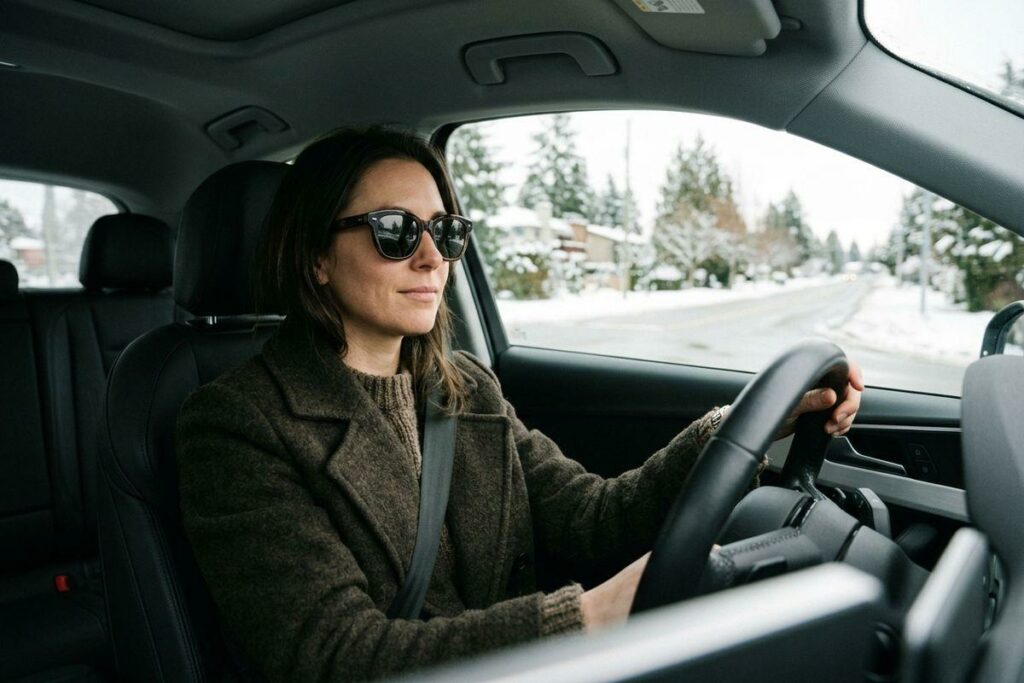
- Car windshields typically block UV, so the lenses usually stay clear while you drive.
- Clear transition lenses still block UV, even when there’s no visible tint.
- Cold weather can slow how quickly the lenses fade back to clear.
- Snow reflects light and UV, which can keep the tint active on bright winter days.
- An eye exam and a lifestyle conversation help you pick the right lens.
You step out of the grocery store into a bright afternoon, and your glasses shift from clear to tinted before you reach the car. Then you climb in, expect the same shade behind the wheel, and it actually lightens a bit. It’s one of the more common questions our team at Eyestyle Eyecare hears from people in South Surrey and Kelowna.
Transition lenses work well outdoors and in winter, but they usually stay clear inside a car because windshields block the UV light needed to activate the tint. If driving glare is your main concern, a lens consultation with our optical team can help you sort out whether a second pair of prescription sunglasses makes more sense.
How Transition Lenses Respond to Light
Transition lenses, also called photochromic lenses, sit clear on your face indoors and darken once you head outside. UV light is what activates the change.
That’s the appeal for a lot of people. One pair handles the walk to work, the desk, the school pickup line, and the patio after. No swapping, no second case in your bag.
Why Transition Lenses Stay Clear in the Car
Car windshields block UV light, and without UV, the lenses have nothing to react to. You can be squinting into a low September sun on Highway 97 and your lenses stay clear the whole drive.
Bright glare and UV aren’t the same thing. Your eyes feel the brightness, but the lens is waiting on a signal it isn’t receiving.
Clear Lenses Still Block UV
Here’s the part people miss. Transition lenses block UV whether they’re tinted or sitting completely clear, so your eyes stay protected behind the wheel even when the lens looks like an ordinary pair of glasses.
Lens Options Made for Driving
If you want tint while you drive, there are options. Some photochromic lenses are made to react to visible light, not just UV, so they can darken behind a windshield.
Prescription sunglasses are the other route, and clip-ons work if you’d rather keep one frame and one prescription. Plenty of drivers in Surrey and Kelowna end up with a daily pair plus a dedicated driving pair.
How BC Winters Affect Transition Lenses
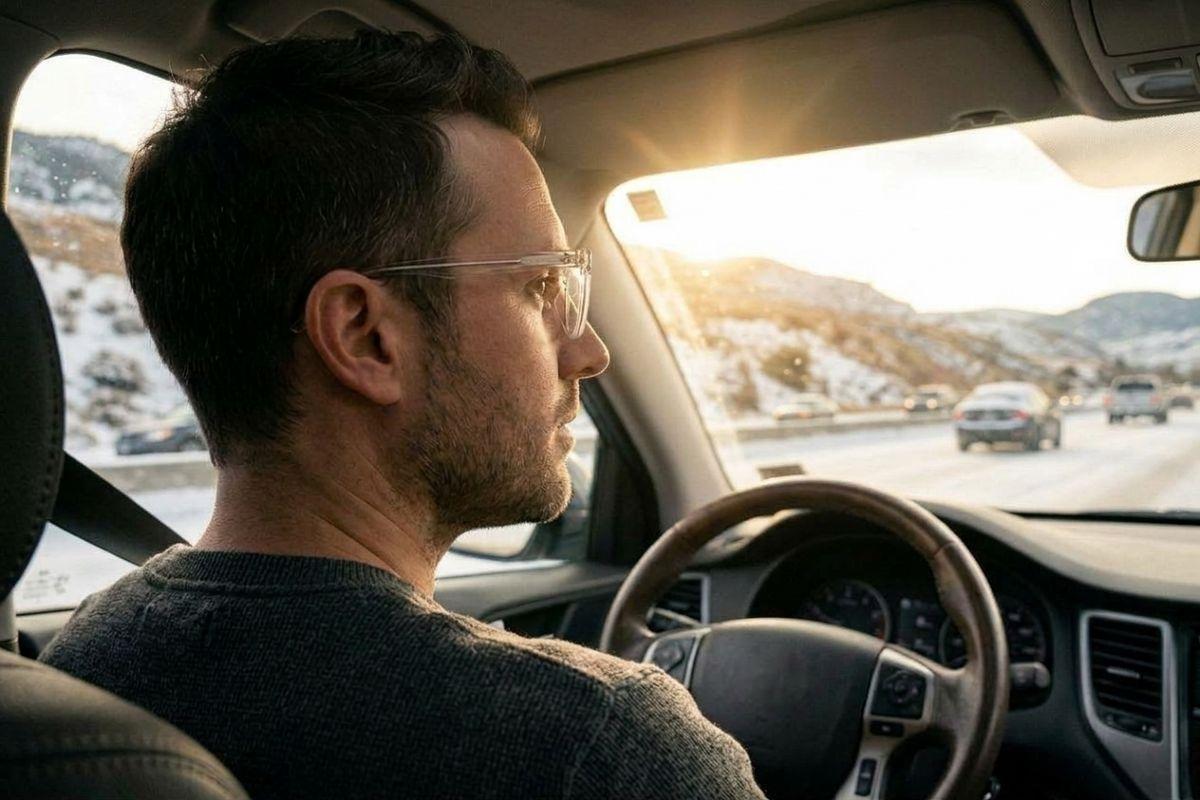
Cold slows things down. In low temperatures, the lenses can take longer to fade back to clear once you step inside, so you might walk into a coffee shop still wearing a light tint for a minute or two.
Snow works the other direction. It reflects light and UV back up at you, which keeps the tint active on bright days at Big White or on a clear morning in the Okanagan.
Even the grey, flat days on the coast send UV through the cloud cover, so the tint may be lighter while the lenses keep doing their job.
What to Know Before You Choose Transition Lenses
The fade back to clear takes a few minutes, which matters if you move between outdoors and indoors constantly during your day. Polarization isn’t included by default either, so if cutting glare off wet pavement or water is a priority, ask about it directly.
Night driving calls for clear lenses. Transition lenses fade to clear in the dark, though many drivers still keep a separate clear pair for long evening trips.
Colour, Coatings, and Prescription Types
Tints come in grey, brown, and a few other shades, and the choice is mostly about how you want colours to look outdoors. Anti-glare and scratch-resistant coatings can be added, and the lenses are available in progressives if you need distance and reading correction in one pair.
We Can Help You Decide
It starts with an eye exam and a current prescription, because the right lens can’t do much with outdated numbers. Surrey and Kelowna optometrists use that visit to check how your eyes are doing and what your prescription needs are now.
Then come the lifestyle questions. How long is your commute? Do you play sports outside? How many hours are you in front of a screen? Your answers point toward one pair or two.
From there, our optical team handles frame and lens fitting so the tint sits where it should and the frame suits your face and your day.
Book an eye exam at Eyestyle Eyecare in South Surrey or Kelowna, and find out whether transition lenses fit the way you live.